 The full PaceFlow ›
Coming November 2026
The full PaceFlow ›
Coming November 2026
For fast bowlers · iPhone
How fast.
And what to fix.
Film one delivery from side on. PaceFlow Lite measures the speed and reads your action position by position — then tells you the one thing to work on this week.
Be first to know when it lands
We'll email you once, when the app is out. Nothing else, and you can unsubscribe in one tap.
Nothing to pay to find out how fast you bowl.
You pay to keep them. Speed, run-up, every measured position and your score come free on every ball you bowl. A subscription is what holds the history — every delivery instead of your latest, the trend across a season, and the coach toolset.
The report
Your action, frozen where it matters.
A delivery takes about half a second. PaceFlow Lite finds the moments inside it that decide how fast the ball comes out — the gather, back-foot contact, front-foot contact, and the instant of release — and measures your position at each one.
Every measure shows the frame it came from. Not a number you have to trust: the actual picture of you, at the moment it was taken.
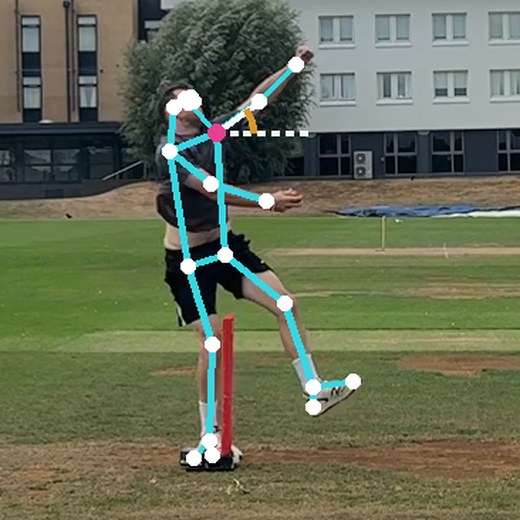 High front arm · BFC
● still
front arm 38°
High front arm · BFC
● still
front arm 38°
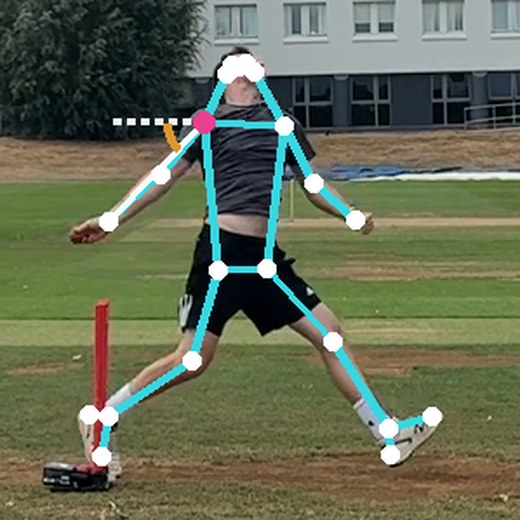 Delayed arm · FFC
● still
bowling arm −30°
Delayed arm · FFC
● still
bowling arm −30°
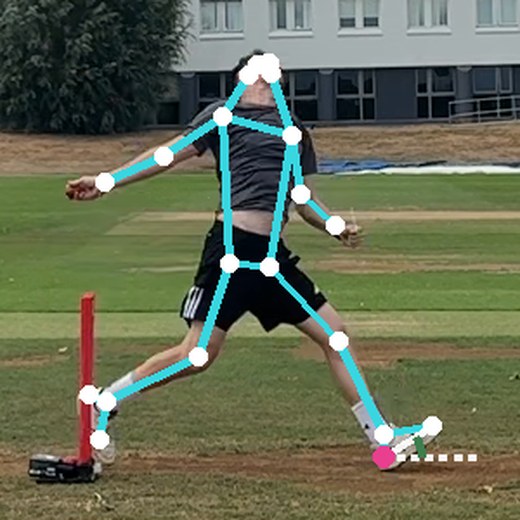 Heel strike · FFC
● still
heel strike 33°
Heel strike · FFC
● still
heel strike 33°
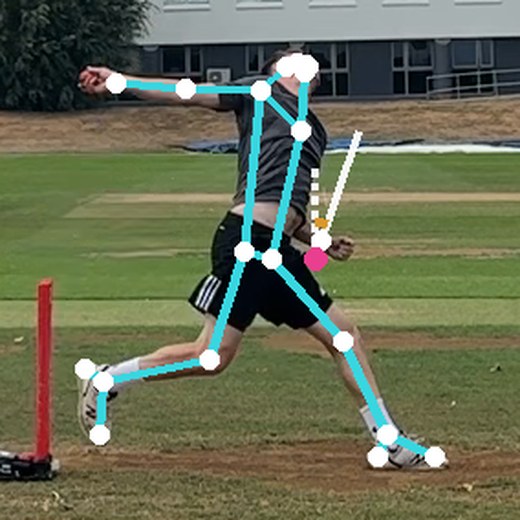 Trunk flexion · FFC → BR
● still
trunk drive 28°
Trunk flexion · FFC → BR
● still
trunk drive 28°
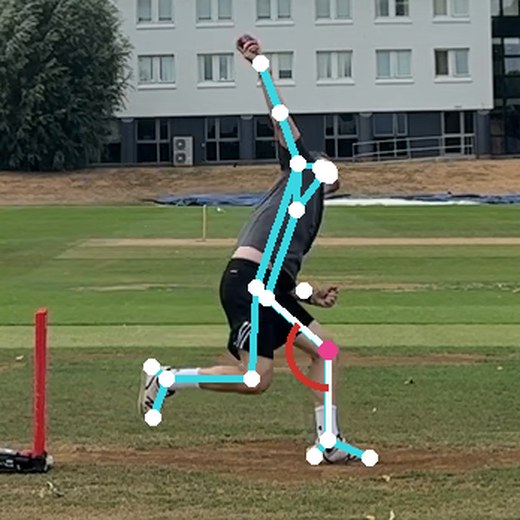 Front knee · BR
● still
front knee 120°
Front knee · BR
● still
front knee 120°
Five positions from one side-on clip. A rear view adds arm bend and the run-up line and completes the score — without it the score stays paused rather than guessing from half an action.
What a subscription holds
One delivery tells you where you are. A season tells you if it's working.
Every measure gets its own line — speed, run-up, each of the positions — over a day, a month or a year. Your newest delivery sits next to your best one, so you can see the difference rather than take our word for it.
4 weeks, high front arm.
9:41 · 64%every point is a real delivery — tap one to open it · the dashed line is the green band
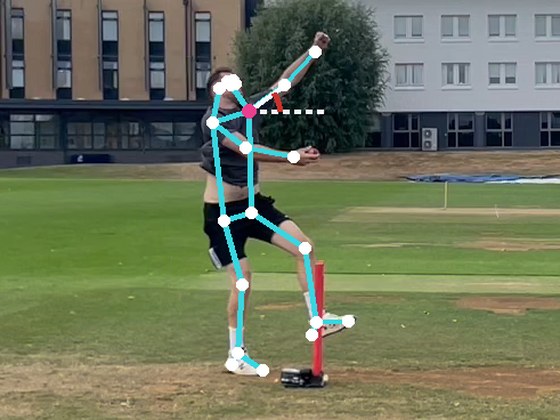 High front arm · BFC
● still
front arm 28°
High front arm · BFC
● still
front arm 28°
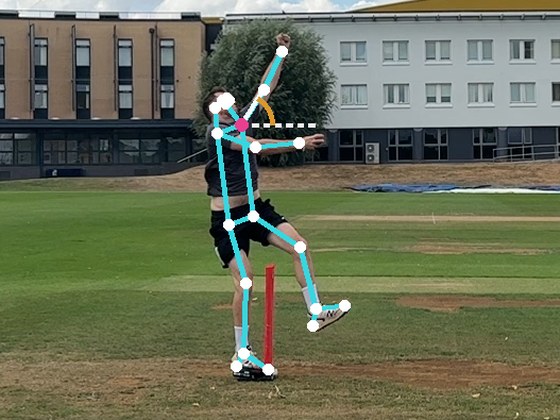 High front arm · BFC
● still
front arm 56°
High front arm · BFC
● still
front arm 56°
3 deliveries in this line · Paul Felton's clips only · recorded by them or for them
The dashed line is the green band. Everything below it is the work — and the app says how many degrees are left, rather than leaving you to do the sum.
The whole delivery
Scrub to any moment. Draw on it. Talk over it.
Move through the delivery frame by frame, stop where something interesting happens, and mark it up — lines, angles, arrows — with your voice over the top. A coach sends that back attached to the ball it refers to, not as a message in a thread that scrolls away.
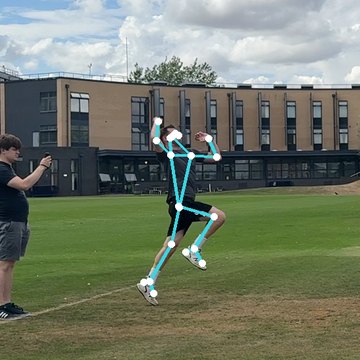
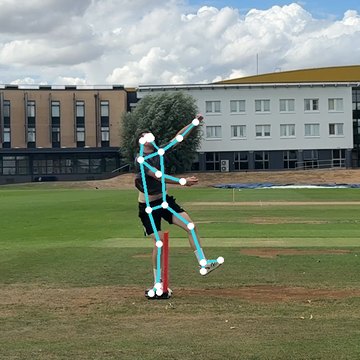
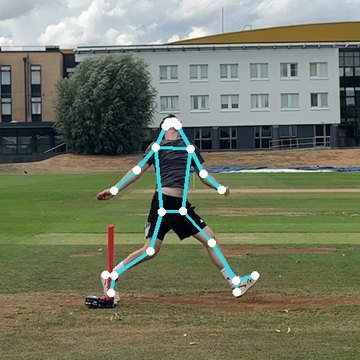
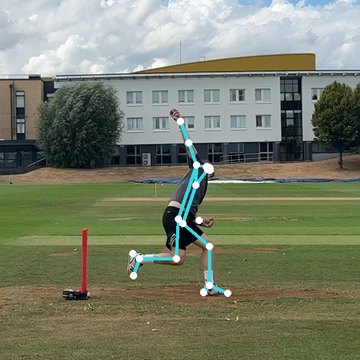
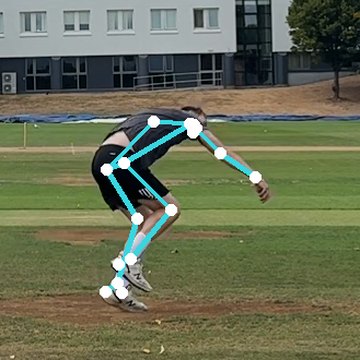
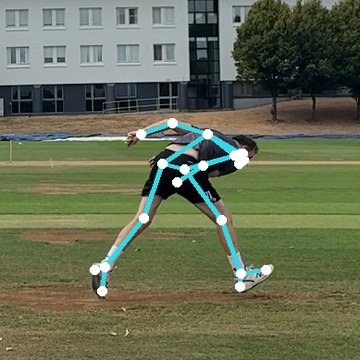
Paul's delivery, every frame the app measured from.
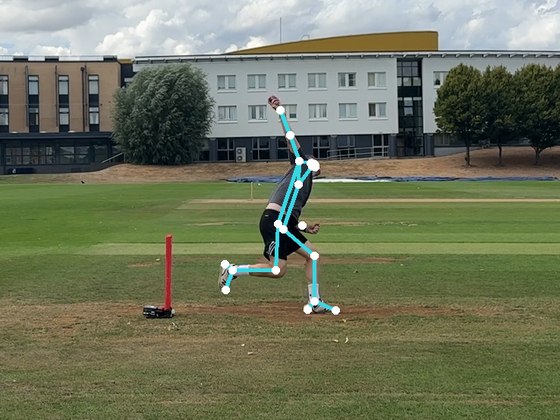
And the same delivery, large enough to work on: step a frame at a time, jump straight to the gather, back foot, front foot or release, then draw on it and talk over it.
Screens shown with example history. The measured values are Paul's real ones and the targets are the app's own. On free you keep your latest side and latest rear analysis — a new recording of that angle replaces the last one.
For parents
The measuring happens on the phone.
Your child's footage does not have to be sent anywhere to get the numbers. The tracking, the angles and the speed are all worked out on the device — unusual for this kind of app, and deliberate for this kind of user.
And nothing a young player records is ever published as video. Under-18 leaderboard entries are metrics only — a speed and a first name — with no footage attached, enforced on our servers rather than left to the app.
How it works
Three things, and none of them are fiddly.
Set the phone up
About ten metres side on to the stumps, chest height, landscape. The app shows you the frame to match. Keep it steady and don't pan — a tripod is ideal, but a steady pair of hands works.
Bowl
One delivery is enough. The app finds the ball, tracks your body through the action and works out the speed — on the phone, while you walk back.
Read the one thing
You get every measure and a score. But the line that matters is the one at the top: the single change worth making this week.
A full analysis takes a few minutes, not a few seconds — it steps through the footage frame by frame rather than guessing from a thumbnail. Currently built for right-arm bowlers.
Every band in the report — what counts as good, what needs work — was set against the biomechanics literature, not picked to look encouraging.Thresholds and coaching wording reviewed and set by Prof. Mark King, School of Sport, Exercise and Health Sciences, Loughborough University — lead author of the 2024 systematic review of fast-bowling technique and ball speed, and a co-founder and director of DINETICQ. PaceFlow Lite is a DINETICQ product and is independent of the University.
Measurements are estimated from ordinary 2D video. PaceFlow Lite is a coaching aid, not a laboratory system and not medical advice. Where the app cannot measure something reliably it says so rather than showing a number it does not believe.
dineticq
From DINETICQ
The phone gets you started. People take it further.
PaceFlow Lite measures your action on your own phone, on your own. DINETICQ — who build it — do the parts a phone cannot: analysis read by a team with twenty years of bowling-action experience, accredited by the ICC and ECB.
PaceFlow bowling report
A comprehensive report with fully personalised analysis and feedback — pace potential, injury risk and an overall bowling profile. Buy one directly, or talk to us about club and squad pricing.
Buy a report › ReportLegality feedback report
A formal assessment of bowling-action legality for you or your players, from the accredited team. This is the one thing PaceFlow Lite deliberately does not do — it reports arm bend as a band and never as a verdict.
Buy a legality report › In personProPace Clinic
A four-day, on-site service for elite fast bowlers: comprehensive assessment and a personalised review, built on twenty years of research at Loughborough.
Learn more › For coachesProPace Academy
Coach education in bowling movement science — on demand, online, and in person. The biomechanics behind every number in this app, taught properly.
See the courses ›Clubs and organisations buying several reports: five or more is 10% off, ten or more is 25% off. Contact the team for bespoke pricing, or see everything at dineticq.com.
Get it the day it's out.
PaceFlow Lite arrives on the App Store in November 2026. Leave your name and we'll tell you — once.